| Brand | Rw Energy |
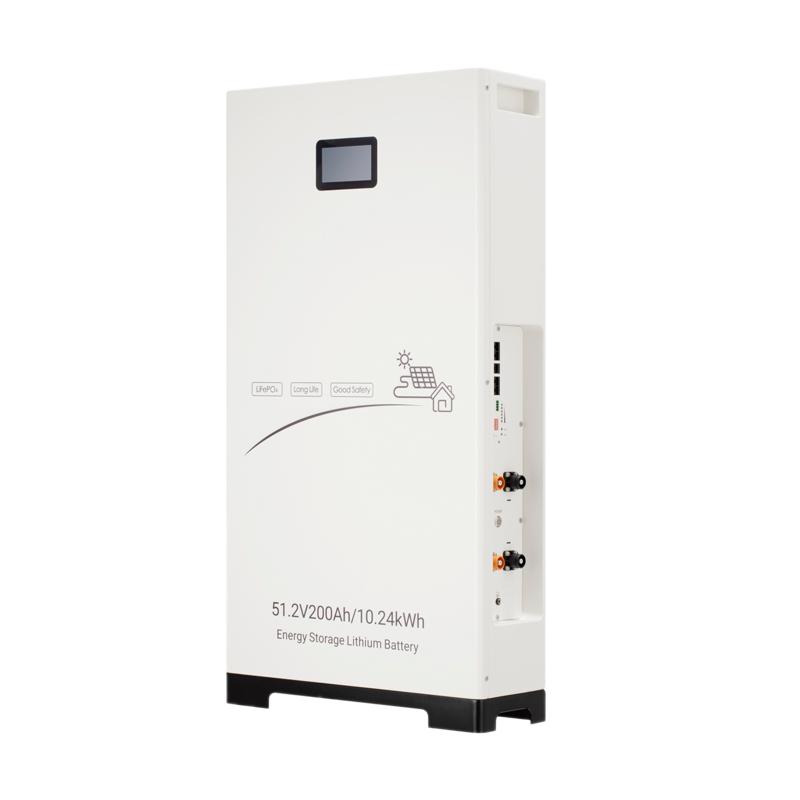
| Model NO. | 10.24kWH-20.48kWH Stacked Energy Storage System(ESS) |
| Rated Output Rating | 5kW |
| Energy storage capacity | 15.36kWh |
| Cell quality | A级 |
| Series | SESS |
Stacked ESS

The ESS series products (Energy Storage System) adopt high-quality lithium iron phosphate battery cells, are equipped with an intelligent BMS (Battery Management System), featuring a long cycle life, high safety performance, and good sealing. They are equipped with a high-frequency off-grid photovoltaic inverter and a built-in MPPT controller, which can provide efficient and reliable energy solutions for off-grid photovoltaic power generation systems, energy storage systems, household photovoltaic energy storage systems, and industrial and commercial energy storage systems.
This system is equipped with an independently developed APP that supports IOS/Android. It enables remote control of battery pack charging and discharging, real-time monitoring of system operation data, and can quickly enter troubleshooting work when a system operation failure occurs, thus efficiently restoring effective power supply.
Peculiarity
Custom stacking capacity, integrated installation free.
Battery pack is replaceable, can be adapted to a variety of batteries, for different batteries to achieve different charging and discharging strategies.
Energy scheduling can be regulated, users can change the charge and discharge according to the power consumption policy of different periods in the region; Low logical O&M cost.
Support battery pack voltage, capacity customization, to meet different use environment
Mature technology, long cycle life, high safety performance.
Modular design, high power density, easy maintenance.
Technical parameter


Note:
The A-class cell can charge and discharge 6000 times, and the B-class cell can charge and discharge 3000 times, and the default discharge ratio is 0.5C.
Class A cell warranty 60 months, Class B cell warranty 30 months.
Application scenarios
Small apartment / rental home energy storage
Adaptation advantages: The stacked design only occupies 0.3㎡ of floor space (about the size of a bedside table), no installation required, can be directly placed on the balcony; 10.24kWh capacity supports the continuous operation of refrigerator + lighting + router for 3-5 days, with temperature resistance of -30℃~50℃, suitable for most areas in the region, covering "small apartment stacked ESS" and "household energy storage".
Backup power supply for small commercial places
Adaptation advantages: 20.48kWh capacity can support the operation of convenience store freezers + cash registers for 6-8 hours; modular stacking supports expansion to 30.72kWh, replaceable battery packs avoid waiting for charging during power outages, covering "small commercial stacked energy storage" and "convenience store backup ESS".
Outdoor temporary power supply (camping / small-scale construction)
Adaptation advantages: A single module weighs about 25kg and can be manually carried, IP20 dustproof suitable for dry outdoor scenes; 5kW rated output can power electric drills, lighting, portable ovens, replacing fuel generators to achieve noise-free and clean power supply, covering "outdoor temporary energy storage scenarios".
The role of the Battery Management System (BMS).
-
Real-time monitoring:The BMS monitors parameters such as voltage, current, and temperature of each battery cell in real time through sensors to ensure the health status of each cell.
-
Equalization management:The equalization circuit (Balancing Circuit) in the BMS is used to adjust the voltage differences between each battery cell. When a cell voltage is detected to be lower than the set value, the equalization circuit will perform voltage compensation in a passive or active way to make the voltages of all cells tend to be consistent.
Equalization strategies.
-
Passive balancing:Excess charge is dissipated through resistors connected in parallel to the battery cells, thereby making the voltges of each cell tend to be consistent.
The disadvantage is that it can only work during the battery charging process and has a large energy loss. -
Active balancing:Using a bidirectional converter or a dedicated equalization chip to transfer charge between battery cells to achieve energy transfer, thereby making the voltages of each cell consistent.
The advantage is that it can be adjusted bidirectionally. It can equalize during charging and discharging, and has low energy loss.
-
5.12kWh-10.24kWh Column Energy Storage System(ESS)

-
2.4–10.24 KWh Household Wall - Mounted Energy Storage Battery

-
9.6KWh/10.24KWh Household Column energy storage battery
-
4.8kWh 5.12kWh Commercial Use Stacked energy storage battery

-
5-20 kWh AC/ DC / Hybrid-Coupling residential energy storage system

-
5.12kWh low-voltage wall-mounted lithium battery

-
LFP All-in-One Energy Storage Battery with Inverter & Controller

-
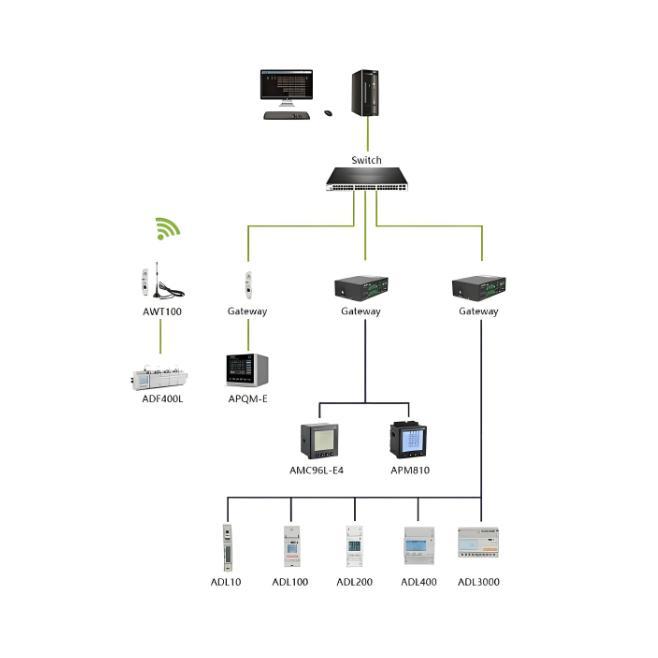 Integrated Smart Power Monitoring and Energy Efficiency Management SolutionOverviewThis solution aims to provide a smart power monitoring system (Power Management System, PMS) centered on end-to-end optimization of power resources. By establishing a closed-loop management framework of "monitoring-analysis-decision-execution," it helps enterprises transition from simply "using electricity" to intelligently "managing electricity," ultimately achieving safe, efficient, low-carbon, and economical energy usage goals. Core PositioningThe core positioning of this system is tRW Energy28/09-2025
 -
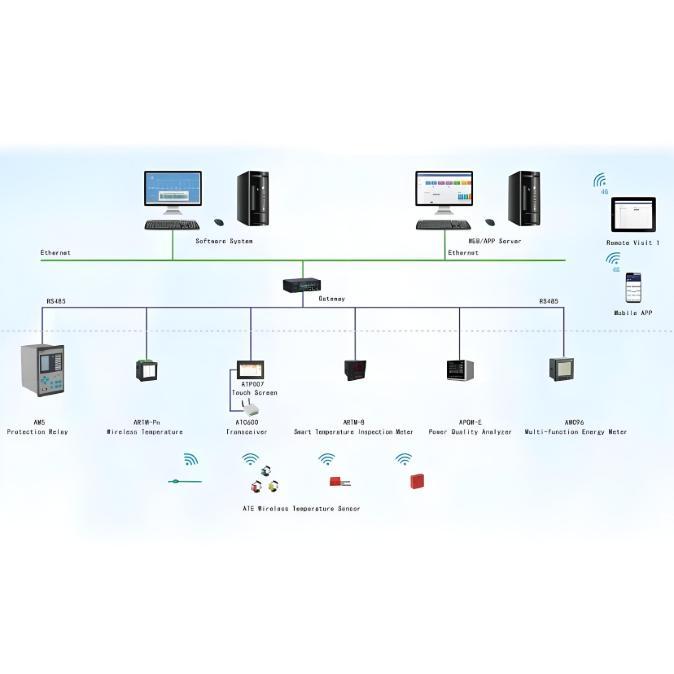 A Novel Modular Monitoring Solution for Photovoltaic and Energy Storage Power Generation Systems1.Introduction and Research Background1.1 Current State of the Solar IndustryAs one of the most abundant renewable energy sources, the development and utilization of solar energy has become central to the global energy transition. In recent years, driven by policies worldwide, the photovoltaic (PV) industry has experienced explosive growth. Statistics indicate that China's PV industry saw a staggering 168-fold increase during the "12th Five-Year Plan" period. By the end of 2015, the installedRW Energy28/09-2025
 -
 Comprehensive Power Quality Diagnostic Expert System Solution1.Core PositioningThis solution is designed to provide a comprehensive, multi-dimensional power quality diagnostic expert system. It moves beyond traditional data acquisition and monitoring, deeply integrating advanced analysis and diagnostic functions, positioning itself as an enterprise's "Comprehensive Physician for Power Quality." It can accurately capture, deeply analyze, and intelligently diagnose various types of power quality issues within the electrical grid. It offers users a full-chaRW Energy28/09-2025
 -
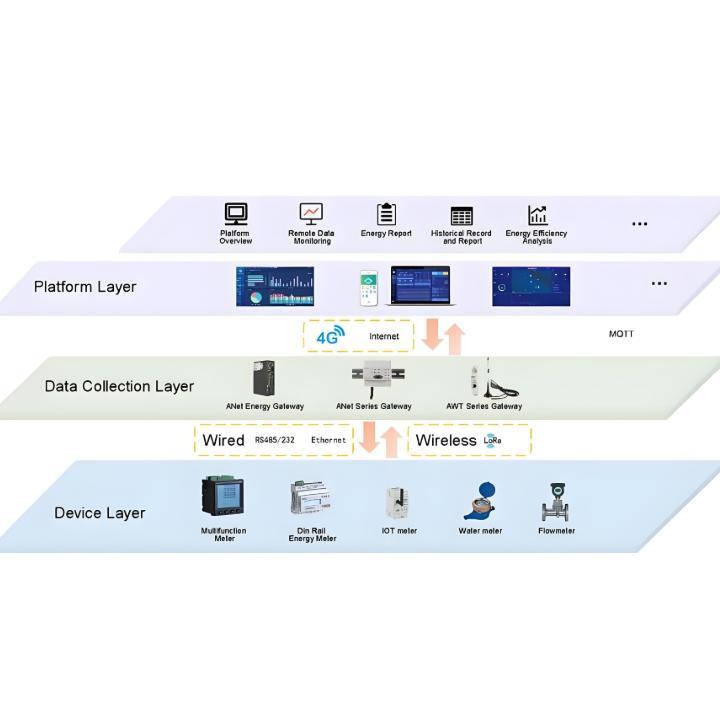
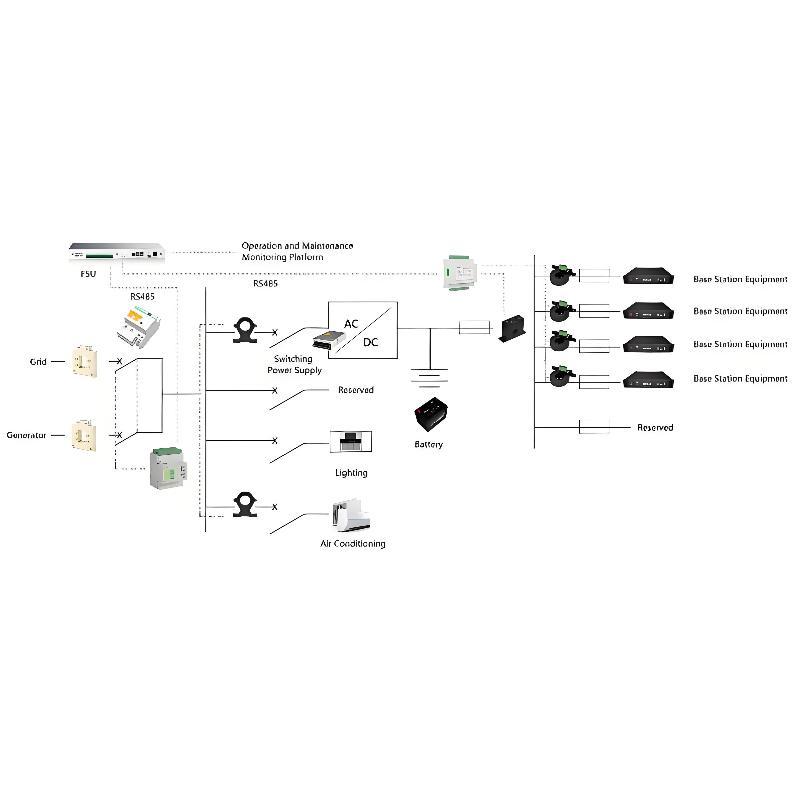 Ubiquitous Energy Management System Solution for Smart Cities and Integrated Parks1.Overview and Core PositioningThe core positioning of this system is: a comprehensive platform for the collaborative management and optimization of multiple energy flows, including water, electricity, gas, and heat. It goes beyond traditional power monitoring by breaking down energy data silos. Through integration, analysis, optimization, and prediction, it serves as an "energy brain" that provides panoramic visibility, intelligent decision-making, and deep value for various energy consumers sRW Energy28/09-2025
 -
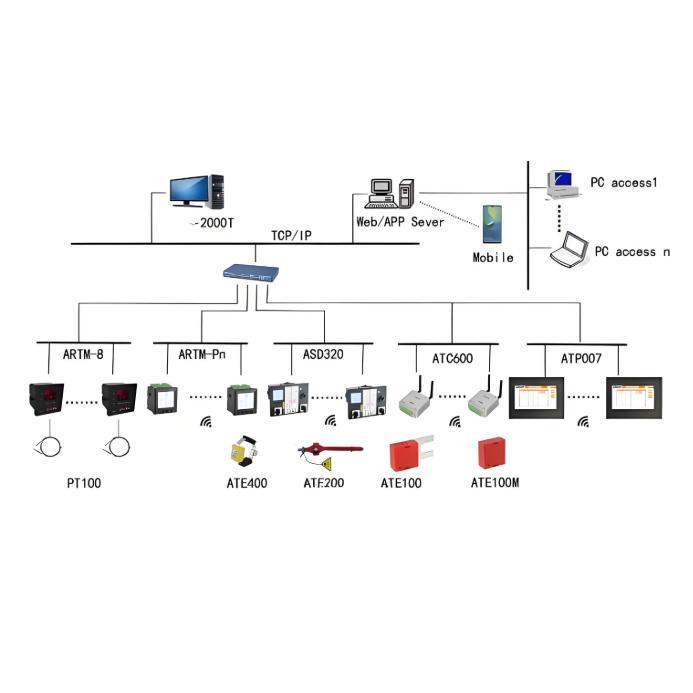 Intelligent Power Monitoring: Smart Power Monitoring System Solution1.System OverviewCore Positioning: AI-Driven Adaptive Power Security GuardianThe Intelligent Power Monitoring system is a new-generation power monitoring solution designed for the future. It breaks through the limitations of "passive alarm" inherent in traditional monitoring systems. By integrating edge computing, cloud computing, and artificial intelligence technologies, it constructs an integrated active defense system encompassing "perception - analysis - decision - early warning." The coRW Energy28/09-2025
 -
 High-Precision Electrical Parameter Monitoring System Solution1.IntroductionWith the increasingly stringent requirements for power supply quality in high-end facilities such as precision manufacturing, medical diagnosis, and data centers, traditional power monitoring systems, due to their low sampling accuracy and weak data analysis capabilities, can no longer meet the demand for deep insight and precise management of power quality. In response, we are introducing a new generation High-Precision Electrical Parameter Monitoring System. With millisecond-lRW Energy28/09-2025