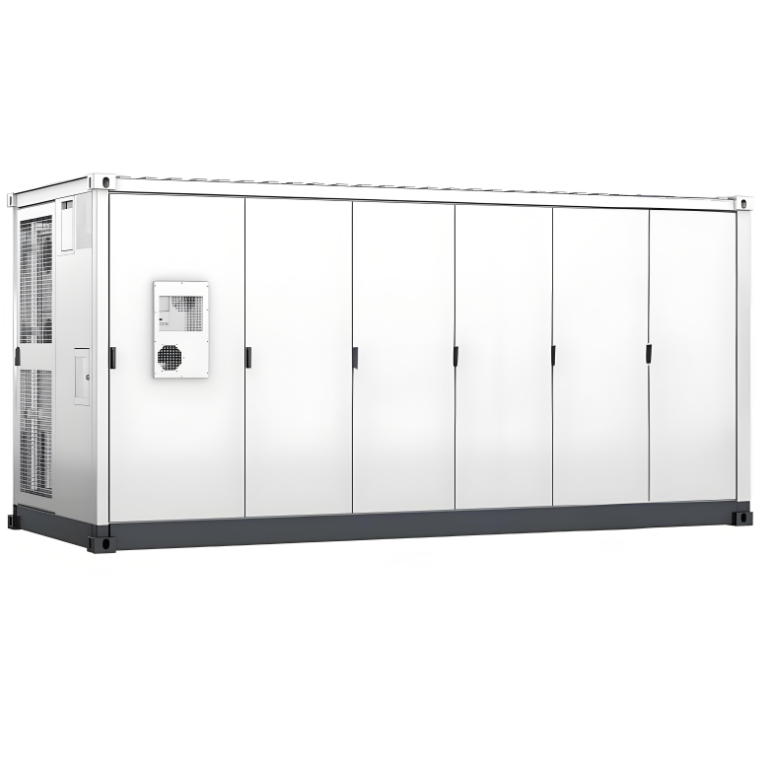
| Brand | Rw Energy |
| Model NO. | 3.44MWh Battery utility-scale energy storage battery System |
| Rated capacity | 3.44MWh |
| Max discharge power | 0.5P |
| Series | BESS |
It is a new generation of utility-scale energy storage system with advanced design principle. The system features of effective liquid cooling, higher efficiency, higher safety and Intelligent O&M. The modular design can satisfy the majority of demanding applications andemerging scenarios,and deliver the most services and value to customers and the grid.
Features
Non-uniform and refined pipeline design, achieving temperature difference <2.5C.
Multiple liquid cooling control modes and auxiliary power consumption decrease by 20%.
Adopting cluster management technology and system efficiency increases by 1%.
Cell to Cell active balance ensures the consistency between cells.
Multiple level protection from cell to system to prevent from uncontrolled heat spread.
Equipped with deflagration venting, gas fire protection and water suppression to ensure the final protection.
Smart management and real time monitoring ensures high efficient commission.
Compact design with side-by-side layout and standard 20ft container design ensures 6.88MWh/40FT.
Release existing transmission capacity and relieve network peak load.
Supplement to the electricity supply, reducing the cost and ensuring the stable power network.
Parameters

Application scenarios
Power Grid Peak Regulation and Frequency Modulation
Adaptation Advantages: A capacity of 3.44MWh can meet the daily peak regulation demand of 15,000 households; liquid cooling technology supports 24-hour continuous charging and discharging, with a response time to grid dispatching instructions of <100ms, helping the power grid meet frequency modulation standards (in line with GB/T 36547 power grid standards); covering "3.44MWh energy storage for power grid peak regulation" and "large-scale BESS for power grid frequency modulation".
New Energy Power Station Absorption
Adaptation Advantages: It can be linked with 100MW-level photovoltaic/wind farms to store intermittent electric energy and increase the new energy absorption rate by 20%; the 20-foot container design shortens the deployment cycle to 15 days, adapting to the needs of rapid grid connection of power stations; covering "3.44MWh energy storage supporting photovoltaic power stations" and "large-scale energy storage systems for wind farms".
Regional Power Grid Backup Power Supply
Adaptation Advantages: IP54 protection and (-20℃~50℃) temperature resistance, suitable for outdoor substation deployment; 3.44MWh capacity can support emergency power supply for key loads of regional power grids (such as hospitals, transportation hubs) for 8-10 hours, avoiding large-scale power outages caused by power grid failures; covering "regional power grid backup energy storage" and "large-scale emergency energy storage systems".
The basic principle of air cooling technology is to take away the heat generated by battery cells through flowing air, thus keeping the battery temperature within a reasonable range. As a heat transfer medium, air can achieve heat exchange through natural convection or forced convection.
-
Natural convection:Natural convection refers to the phenomenon in which air flows by itself due to the difference in air density caused by temperature differences.In some cases, natural convection can be used to achieve simple thermal management, but this is usually not sufficient to meet high-intensity or high-density energy storage requirements.
-
Forced convection:Forced convection is to accelerate air flow through fans or other mechanical devices, thereby improving heat exchange efficiency.In container energy storage systems, forced convection is usually used to achieve effective thermal management.
-
107kWH-232kWH Box integrated Energy Storage System(ESS)

-
51.2kWH-215kWH PV and ESS integrate machine-PV-storage synergy solution

-
5.12kWh-25.6kWh Rack mounted Energy Storage System(CESS)

-
215KWh Industrial and commercial energy storage

-
261kWh Industrial and commercial Intelligent energy storage integrated cabinet

-
209kWh Industrial and commercial energy storage integrated cabinet

-
125kW Industrial and commercial Intelligent energy storage liquid-cooled integrated cabinet

-
Intelligent energy storage liquid-cooled integrated cabinet(Industrial and commercial energy storage)

-
50kW Smart energy storage air-cooled integrated cabinet(Industrial and commercial energy storage)

-
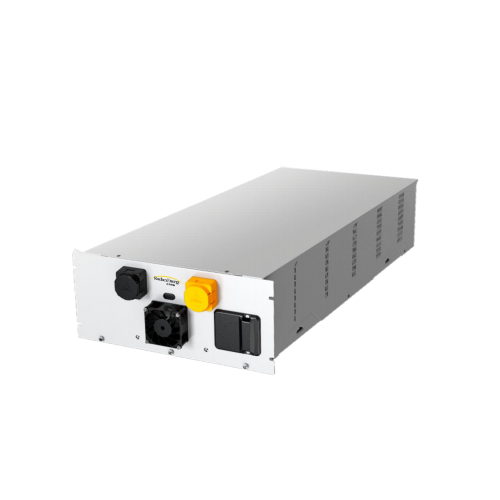
Air-Cooling Lithium Battery PACK
-
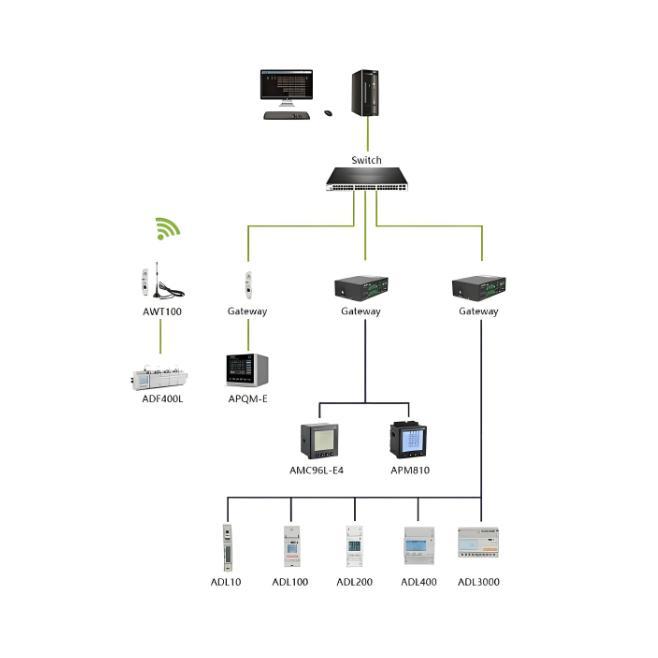 Integrated Smart Power Monitoring and Energy Efficiency Management SolutionOverviewThis solution aims to provide a smart power monitoring system (Power Management System, PMS) centered on end-to-end optimization of power resources. By establishing a closed-loop management framework of "monitoring-analysis-decision-execution," it helps enterprises transition from simply "using electricity" to intelligently "managing electricity," ultimately achieving safe, efficient, low-carbon, and economical energy usage goals. Core PositioningThe core positioning of this system is tRW Energy28/09-2025
 -
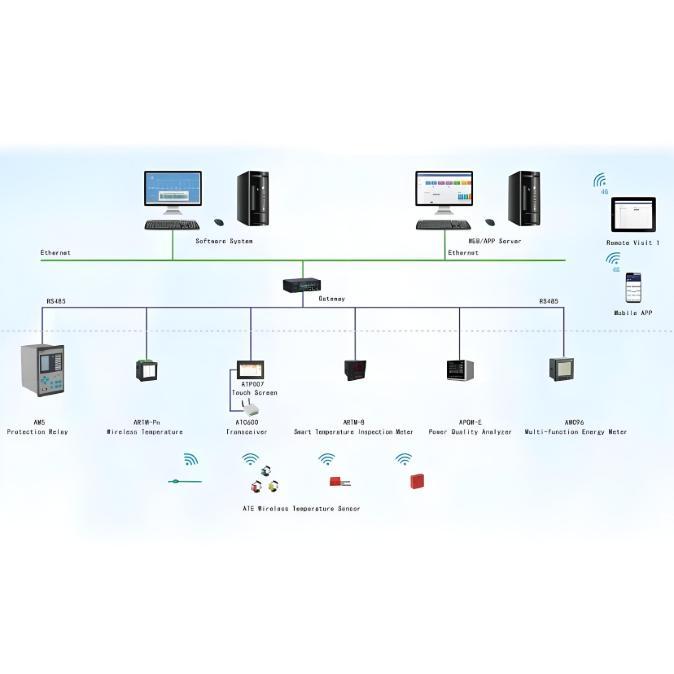 A Novel Modular Monitoring Solution for Photovoltaic and Energy Storage Power Generation Systems1.Introduction and Research Background1.1 Current State of the Solar IndustryAs one of the most abundant renewable energy sources, the development and utilization of solar energy has become central to the global energy transition. In recent years, driven by policies worldwide, the photovoltaic (PV) industry has experienced explosive growth. Statistics indicate that China's PV industry saw a staggering 168-fold increase during the "12th Five-Year Plan" period. By the end of 2015, the installedRW Energy28/09-2025
 -
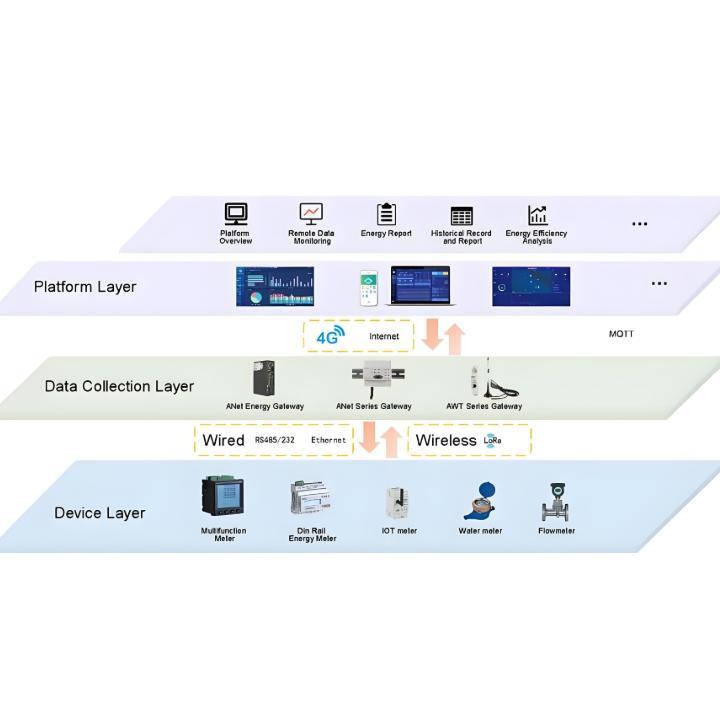 Comprehensive Power Quality Diagnostic Expert System Solution1.Core PositioningThis solution is designed to provide a comprehensive, multi-dimensional power quality diagnostic expert system. It moves beyond traditional data acquisition and monitoring, deeply integrating advanced analysis and diagnostic functions, positioning itself as an enterprise's "Comprehensive Physician for Power Quality." It can accurately capture, deeply analyze, and intelligently diagnose various types of power quality issues within the electrical grid. It offers users a full-chaRW Energy28/09-2025
 -
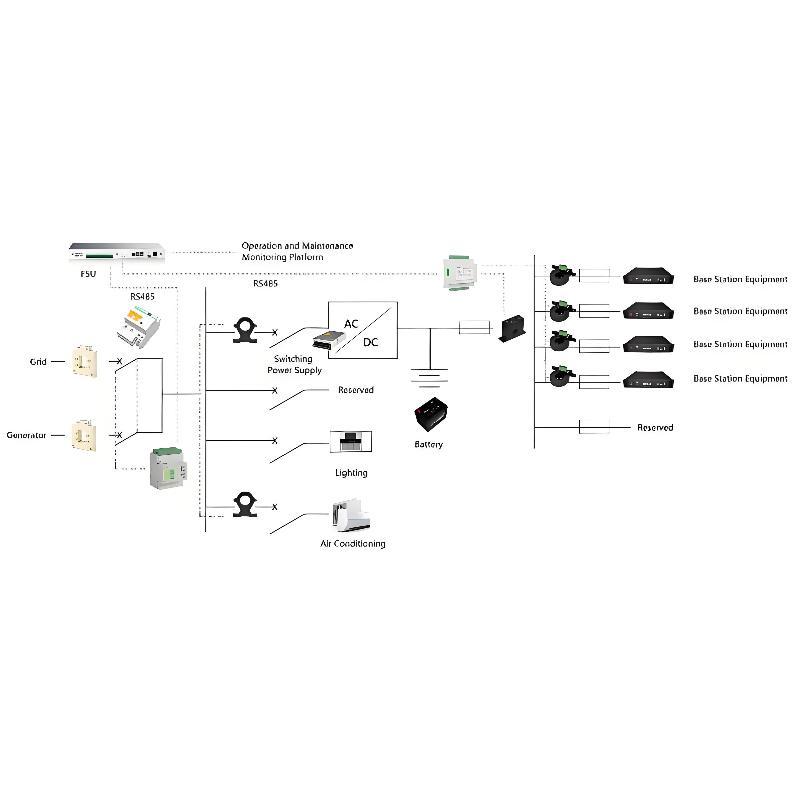 Ubiquitous Energy Management System Solution for Smart Cities and Integrated Parks1.Overview and Core PositioningThe core positioning of this system is: a comprehensive platform for the collaborative management and optimization of multiple energy flows, including water, electricity, gas, and heat. It goes beyond traditional power monitoring by breaking down energy data silos. Through integration, analysis, optimization, and prediction, it serves as an "energy brain" that provides panoramic visibility, intelligent decision-making, and deep value for various energy consumers sRW Energy28/09-2025
 -
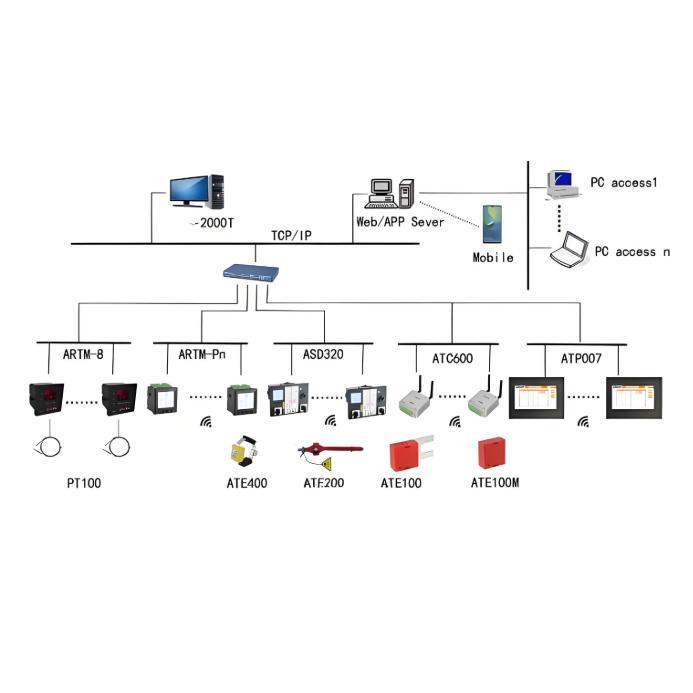 Intelligent Power Monitoring: Smart Power Monitoring System Solution1.System OverviewCore Positioning: AI-Driven Adaptive Power Security GuardianThe Intelligent Power Monitoring system is a new-generation power monitoring solution designed for the future. It breaks through the limitations of "passive alarm" inherent in traditional monitoring systems. By integrating edge computing, cloud computing, and artificial intelligence technologies, it constructs an integrated active defense system encompassing "perception - analysis - decision - early warning." The coRW Energy28/09-2025
 -
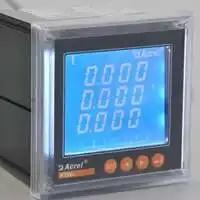 High-Precision Electrical Parameter Monitoring System Solution1.IntroductionWith the increasingly stringent requirements for power supply quality in high-end facilities such as precision manufacturing, medical diagnosis, and data centers, traditional power monitoring systems, due to their low sampling accuracy and weak data analysis capabilities, can no longer meet the demand for deep insight and precise management of power quality. In response, we are introducing a new generation High-Precision Electrical Parameter Monitoring System. With millisecond-lRW Energy28/09-2025